

Dropshipping is one of the easiest ecommerce models to start, but one of the hardest to scale profitably. The difference between launching a store and running one that actually makes money usually comes down to the tools you use and how well they work together. Your app stack affects how quickly you can find and test products, how efficiently orders are fulfilled, how reliably inventory stays synced, and how well your store converts the traffic you pay for.
Most merchants start by looking for the “best” dropshipping app, but that is usually the wrong question. What matters more is which combination of apps covers sourcing, fulfillment, and conversion without creating overlap or gaps. One app rarely handles everything well, and stacking too many disconnected tools usually creates more friction than value. The stores that scale more smoothly tend to use a lean, integrated stack where each app has a clear job and fits cleanly into the wider workflow.
This article covers 15 of the best Shopify dropshipping apps for 2026, along with practical frameworks for choosing the right tools based on your stage, your growth goals, and the problems you need to solve right now. The goal is not just to list apps, but to help you build a stack that supports faster testing, stronger automation, and better profitability as you grow.
Why the Right Apps Matter for Dropshipping Success

Dropshipping has changed the way people launch and scale e-commerce businesses. Instead of holding inventory, you act as the middleman, selling products that are shipped directly from suppliers to customers. It's a low-overhead model, which makes it attractive. But it's also:
- Competitive
- Fast-paced
- Full of moving parts
Dropshipping's Explosive Growth
Retail e-commerce sales jumped from $1.3 billion in 2014 to $3.5 billion in 2019, and projections show they'll hit $6.5 billion by 2023. That explosive growth has been fueled in large part by dropshipping, which remains one of the most accessible paths into online retail. But growth brings competition. If you're managing everything manually, supplier communication, product uploads, inventory tracking, order fulfillment, shipping, and customer service, you'll fall behind. Time delays, fulfillment errors, and poor customer experiences can quickly sink a dropshipping store.
Apps for Dropshipper Scaling
That's why smart dropshippers rely on apps. The right tools automate repetitive tasks, keep your product listings synced, track inventory in real time, and even help you find winning products. They reduce human error, save time, and let you focus on growth, whether that's marketing, customer support, or testing new niches. In short, they help you scale without burning out.
Related Reading
- Best Apps For Dropshipping
- Is Dropshipping Still Profitable
- How To Start Dropshipping For Free
- Where To Buy Dropshipping Products
- Is Amazon Dropshipping Profitable
- How To Find Dropshipping Products
The 3 Core App Categories Every Dropshipping Store Needs
Before jumping into individual app recommendations, it helps to understand the three functional categories that every dropshipping store needs covered. Most merchants install apps reactively, adding tools when a specific problem appears, but the stores that run efficiently are the ones that fill each category intentionally from the start. Thinking in categories rather than individual tools helps you avoid gaps and overlap in your workflow.
Product Sourcing Apps
These apps help you find products, connect to suppliers, and import listings into your Shopify store. They handle the front end of your supply chain: what you sell, who supplies it, and how products get listed. DSers, Spocket, Dropshipman, CJ Dropshipping, and Alidrop all fall into this category, each with different strengths around supplier geography, product selection, and marketplace access. The sourcing app you choose directly affects your product margins, shipping times, and supplier reliability, so this is where most of the early decision-making should focus.
Fulfillment and Automation Apps
Once an order comes in, fulfillment apps handle the operational chain: routing the order to the supplier, syncing inventory levels, updating tracking numbers, and managing pricing rules. Zendrop, HyperSKU, Dropshipman, and Zopi all serve this function with varying degrees of automation. Without strong fulfillment automation, every order requires manual processing, which breaks down fast once you move past a handful of daily sales. The more this layer is automated, the more time you free up for product testing and marketing.
Conversion and Store Performance Tools
This is the category most dropshippers overlook, and it is often the one with the highest impact on profitability. Conversion tools include product page builders, image enhancement tools, review importers, and CRO apps. They do not manage your supply chain, but they directly determine whether the traffic you drive to your store actually turns into revenue. Tools like PagePilot generate conversion-focused product pages from supplier or competitor URLs, which speeds up the testing cycle and improves the quality of what customers see when they land on your store. A perfectly automated backend means nothing if your product pages do not convert.
The table below maps each category to its function and examples so you can see where your current stack has gaps.
High-performing Shopify dropshipping stores use a combination of sourcing, fulfillment, and conversion tools rather than relying on a single app to do everything.
15 Best Apps For Dropshipping Businesses
1. PagePilot: The Smart Dropshipping Page Builder
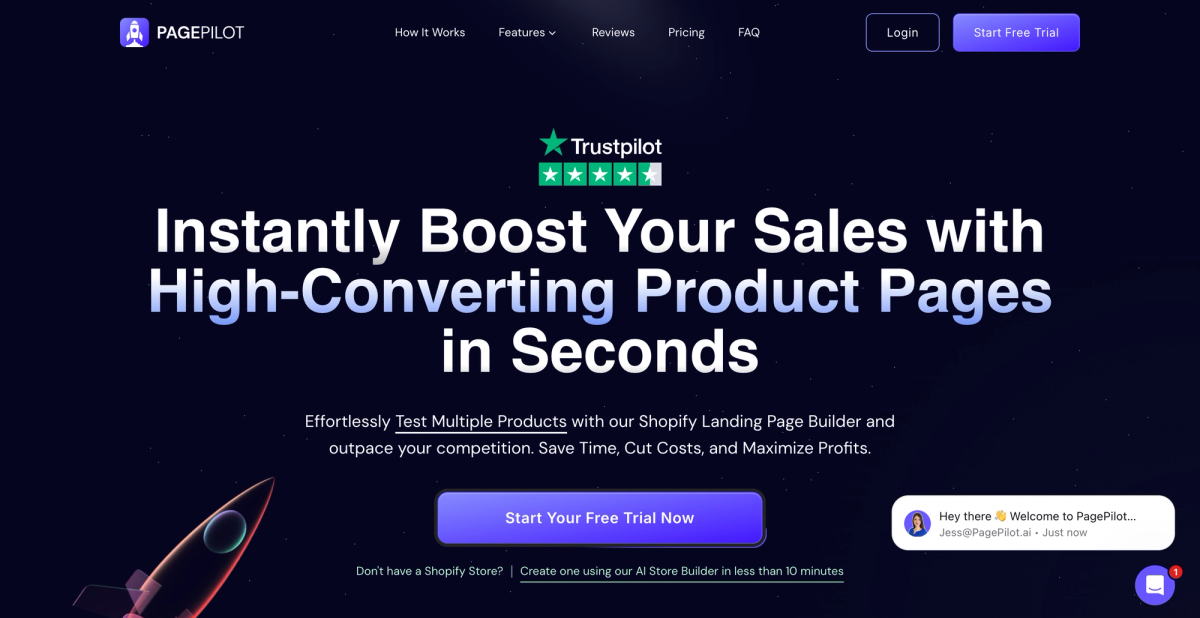
In dropshipping, speed matters. PagePilot is built to help you move faster, especially when testing new products or marketing angles. Instead of manually building product pages from scratch, PagePilot uses AI to do the heavy lifting for you. Here’s how it works: you input a competitor or supplier URL, and PagePilot generates a high-converting product page based on the content it finds. That includes:
- Copy
- Layout
- Visuals
Elevating Product Visuals with AI
PagePilot doesn’t merely replicate what’s already available; it enhances it. The built-in AI product image feature enhances your visuals, helping your pages stand out instead of blending in with the duplicate generic content that every other seller uses. If you're regularly testing products and don’t want to spend hours building pages that might flop, this tool can help streamline that process. PagePilot also offers a free trial where you can generate three product pages without needing a credit card—ideal for trying before you commit. For dropshippers who value speed, differentiation, and better conversion potential, PagePilot is a tool worth considering.
2. DSers: The AliExpress Dropshipping Automation Tool
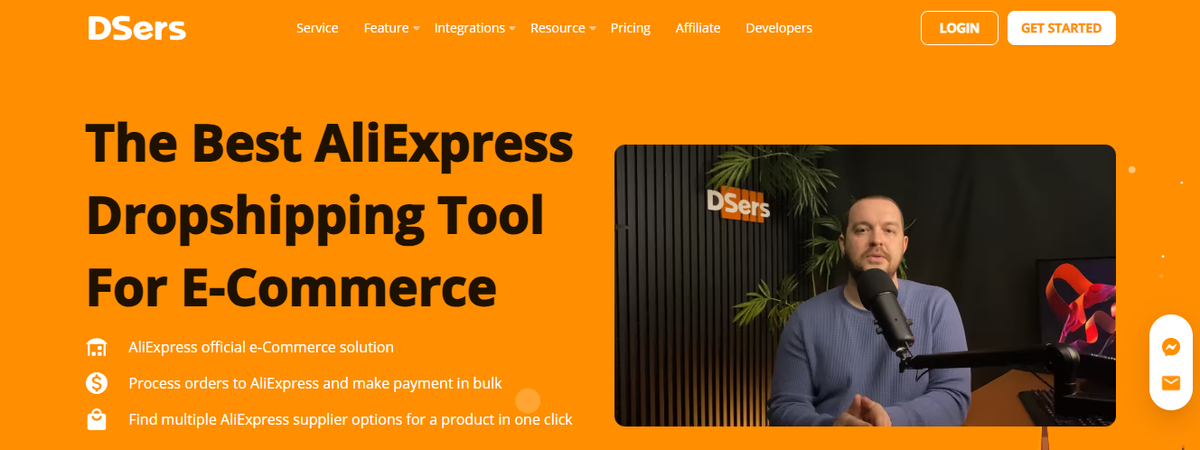
DSers is a powerful dropshipping automation tool designed for AliExpress users. It simplifies the process of managing orders, finding products, and optimizing your online store. With DSers, entrepreneurs can efficiently scale their dropshipping business while saving time and minimizing manual tasks. Its user-friendly interface and robust features make it an essential tool for anyone looking to succeed in the competitive dropshipping market.
Key Features
- Supplier Optimizer
- Bulk Order
- Variants Mapping
- Bundle Products
- Auto Sync
- Tracking Numbers
- Auto Update
- Order Status
- Stock Management
- Shipping Settings
- Automatic Pricing
- Multiple Stores Management
3. Spocket: USA & EU Dropshipping
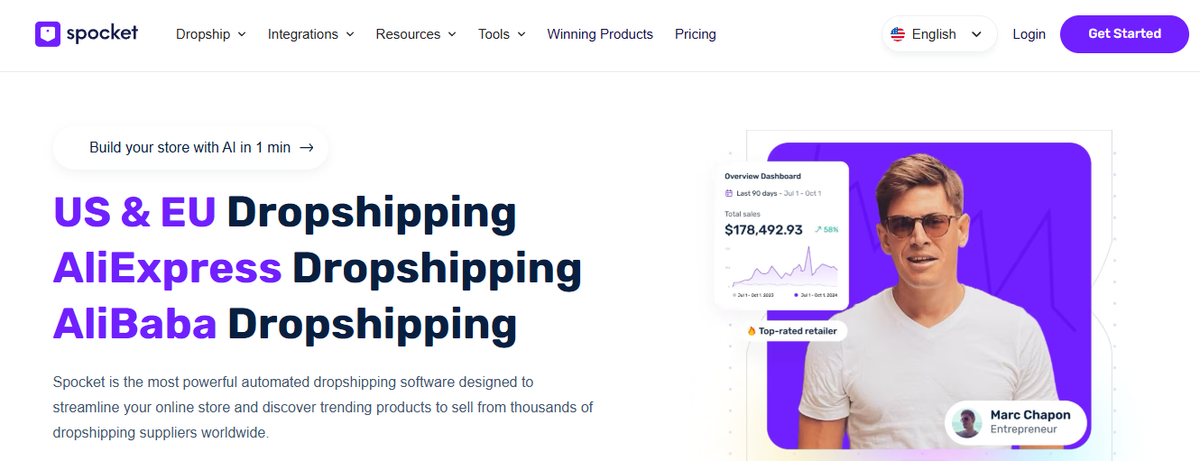
Spocket is a leading dropshipping platform that connects eCommerce entrepreneurs with high-quality dropshipping suppliers from the U.S. and Europe. It allows users to easily source and sell products without holding inventory, offering:
- Fast shipping
- Reliable products
With seamless integration into platforms like Shopify, Spocket helps businesses scale quickly by automating order fulfillment and product management, making it an ideal solution for dropshippers.
Key Features
- High-Quality
- Trending Products
- Reliable US and EU Dropshipping Suppliers
- Fast Shipping
- Best Customer Support
- Multiple Payment Options
4. Dropshipman: Easy Dropshipping
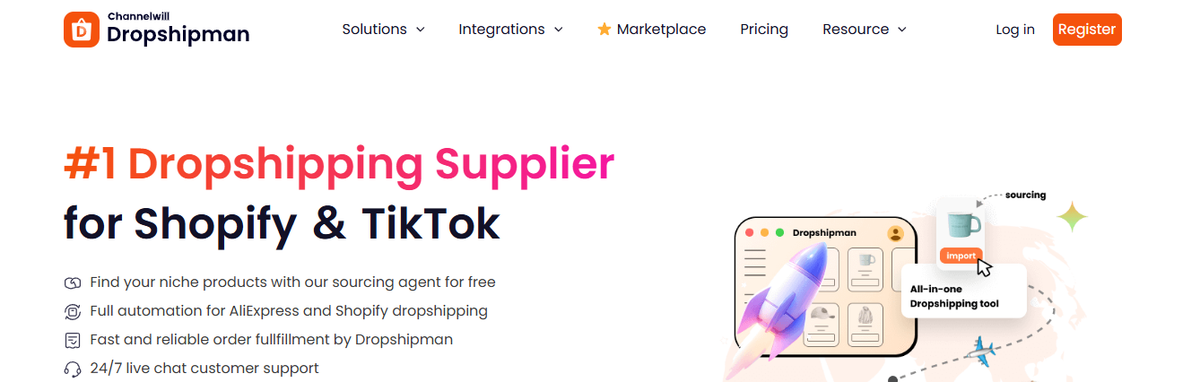
Dropshipman simplifies and automates your dropshipping business, providing access to over 1 million products from AliExpress and Temu while ensuring reliability and quality. Our platform connects you with trusted suppliers across major marketplaces, including Amazon, eBay, and Walmart, enabling you to maximize your profitability. Experience a guided setup, dedicated support, and efficient order fulfillment to take your dropshipping venture to the next level.
Key Features
- Fast Product Selection
- Automated Order Fulfillment
- Dedicated Consultant Support
- One-Click Product Import
- Multi-Marketplace Integration
5. Syncee Collective Dropshipping
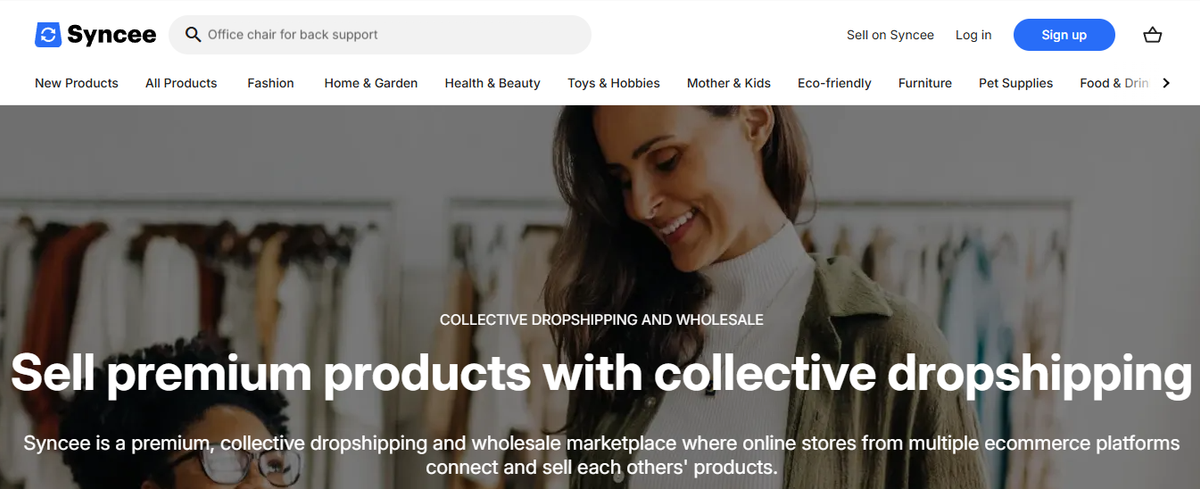
Syncee is a collective dropshipping and wholesale marketplace on Shopify designed to help retailers and suppliers connect and sell each other’s products. Retailers can discover complementary items from local brands or showcase their products. Within this premium unified marketplace, businesses can:
- Build lasting partnerships
- Tap into new audiences
- Increase their sales collectively
Risk-Free Dropshipping with Syncee
Syncee enables stores to start selling risk-free without holding any inventory. Suppliers can reach new markets, both locally and globally. Retailers can start with dropshipping and transition to wholesale as they identify their top-selling products. This allows retailers to focus on sales while suppliers manage shipping and fulfillment.
Key Features
- Millions of unique and high-quality products
- AI-powered product discovery with personalized recommendations
- Automated product imports and updates
- Order synchronization
- You can earn a commission by inviting partners
- 24/7 support
6. Alidrop: All-in-One AliExpress Dropshipping Solution
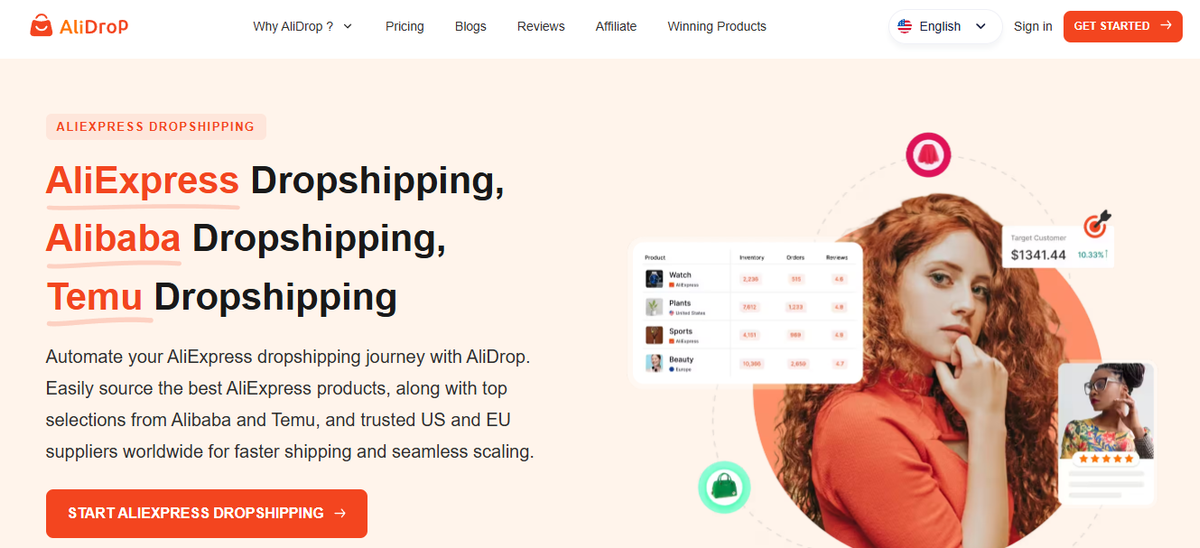
Alidrop is an all-in-one solution that connects AliExpress, Alibaba, and Temu suppliers for your Shopify store. You can:
- Browse a curated feed of best-selling items
- Import them in one click
- Route every order to the correct supplier without manual work
Real-time inventory sync, quick tracking updates, and US/EU sourcing options enable you to achieve a global reach while maintaining short shipping times.
Key Features
- Trending Products Library
- 1-Click Import
- Order Automation
- Shopify Integration
- Multi-Channel Reach
7. DropCommerce: US Dropshipping
DropCommerce is a powerful dropshipping platform designed for entrepreneurs looking to source high-quality products from North American suppliers. It simplifies the process of:
- Managing orders
- Finding products
- Optimizing your online store
With DropCommerce, business owners can efficiently scale their dropshipping operations while ensuring fast shipping times and reliable product quality. Its user-friendly interface and robust features make it an essential tool for anyone looking to succeed in the competitive e-commerce market, particularly those focused on offering premium, domestically sourced products.
Key Features
- Product Sourcing
- Platform Integration
- Automated Order Fulfillment
- Fast Shipping
- Transparent Pricing
- Inventory Management
- Order Tracking
- Returns Management
- Customer Support
- Customizable Pricing
8. CJ Dropshipping: Comprehensive Shopify App for Global Dropshipping
CJ Dropshipping is a top-rated Shopify app designed to simplify and automate the dropshipping process for online sellers. Known for its extensive product sourcing, CJ offers a wide range of goods directly from factories at competitive prices. The platform integrates seamlessly with Shopify stores, providing:
- Auto-listing
- Product import from suppliers like 1688 and Taobao
- Real-time syncing for efficient order fulfillment
CJ Dropshipping features a global logistics network, ensuring fast local warehouse deliveries within 2-3 days in some regions.
Key Features
- Efficient product sourcing and auto-listing
- Big-data-powered trending product recommendations
- Customizable products and packaging (Print on Demand, OEM)
- Access to a professional agent for 24/7 support
- Local warehouse delivery with 2-3 day shipping
- Integration with popular suppliers like AliExpress, 1688, and Taobao
9. Zendrop: Fast and Flexible Shopify Dropshipping Solution
Zendrop is a highly rated Shopify dropshipping app that streamlines product sourcing and fulfillment. Developed by experienced dropshippers, Zendrop offers fast and reliable shipping, with access to suppliers in the US and China. With an easy one-click product addition feature, Zendrop simplifies store management while offering custom branding options for a more personalized shopping experience. Merchants benefit from Zendrop’s automated order fulfillment, efficient inventory management, and a diverse product catalog of over 1 million items.
Key Features
- One-click product integration
- Access to US and China-based suppliers
- Custom packaging and private labeling
- Subscription box options for recurring revenue
- Automated order fulfillment
- Tracking
10. HyperSKU: Efficient and Customizable Dropshipping for Shopify
HyperSKU is an all-in-one dropshipping solution designed to streamline product sourcing, order fulfillment, and global shipping. Offering seamless Shopify integration, HyperSKU provides access to over 2,000 reliable suppliers and a diverse catalog of high-quality products, including:
- Apparel
- Home goods
- Pet supplies
The platform stands out for its automated order fulfillment, real-time inventory synchronization, and precise tracking updates, enabling merchants to manage their operations with ease. Custom branding options, such as private labeling and personalized packaging, also help Shopify store owners establish a unique brand identity.
Key Features
- Real-time inventory synchronization
- Automated order fulfillment and supplier management
- Global shipping to 72 destinations, with a built-in shipping calculator
- Private label services and custom packaging options
- Product comparison tools and sample requests
- Easy integration with Shopify and WooCommerce
11. Trendsi: Best Shopify Fashion Dropshipping App
Trendsi is a top-rated Shopify app (4.9/5) that streamlines the fashion dropshipping process by connecting retailers with a wide range of trendy products, eliminating the hassle of managing inventory and fulfillment. Specializing in women’s fashion, Trendsi offers access to over 12,000 items from reputable U.S. and overseas suppliers. Retailers can:
- Source products
- Order samples
- Leverage wholesale options at factory costs
Notable features include dropshipping with branded invoices, low minimum order quantities, and support for custom packaging and private labeling as your brand grows.
Key Features
- Dropshipping from U.S. and overseas suppliers
- Open-pack wholesale and made-to-order manufacturing
- Branded invoices and private labeling options
- Agile production for custom styles
- Over 12,463 women’s fashion items
12. Printiful: Best Print-On-Demand Dropshipping App for Shopify
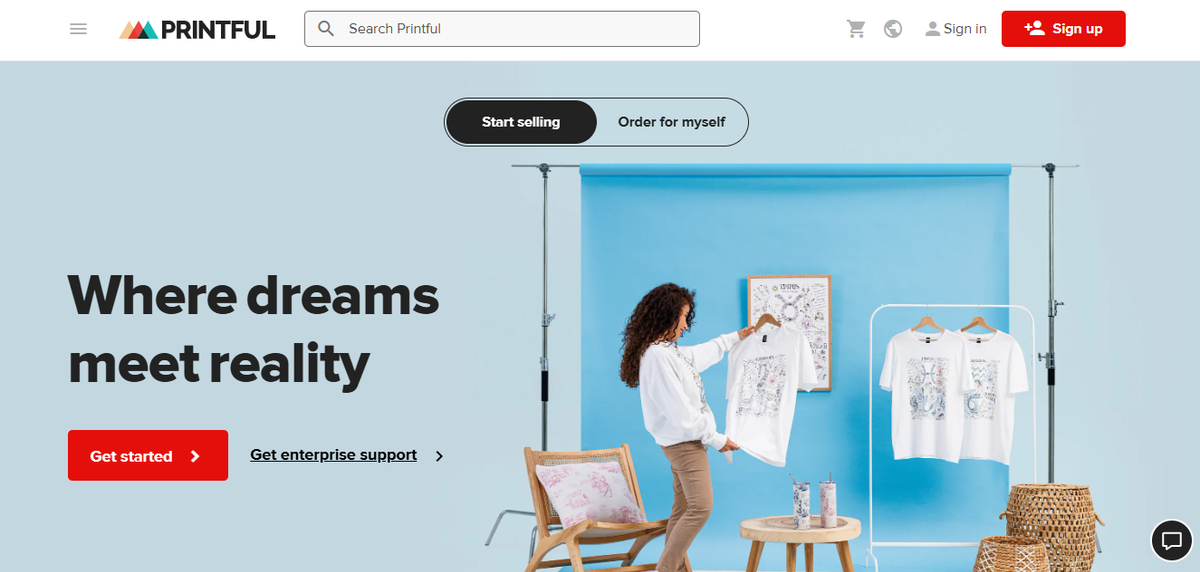
Printful is one of the best Shopify dropshipping apps, known for its robust print-on-demand services that eliminate the need for inventory management. The app enables you to offer customizable products, including clothing, accessories, and home decor, all made to order and shipped directly to your customers.
Effortless Shopify Integration and Order Management
With seamless Shopify integration, Printful simplifies product listings and order management. The standout feature is its custom branding options, which enable businesses to personalize packaging, labels, and even add inserts such as business cards, making it an excellent choice for enhancing the customer experience.
Key Features
- No upfront inventory costs
- Print-on-demand customizable products
- Seamless Shopify integration
- Built-in design tools and mockup generator
- Global fulfillment centers for faster delivery
- Custom branding for products and packaging
13. Printify: A Leading Print-on-Demand Dropshipping App for Shopify
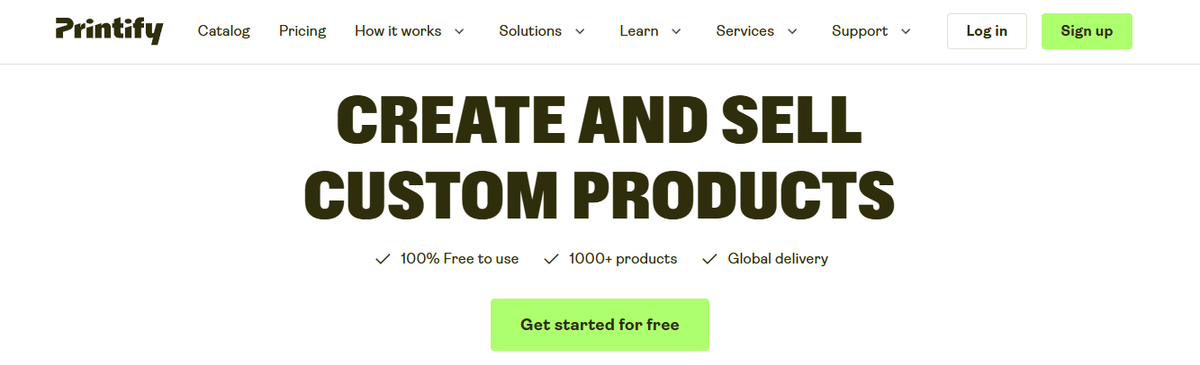
Printify is a top-tier print-on-demand service for Shopify, offering over 300 customizable products, including apparel, home decor, and stationery. With its intuitive interface and robust design tools, Printify simplifies the process of creating and selling custom products, allowing users to launch their stores without managing inventory. The app connects with over 90 global print providers, enabling faster shipping and localized production. Costs are only incurred after an order is placed, making it a low-risk option for entrepreneurs.
Key Features
- Print-on-demand service with no inventory management
- Access to over 90 print providers worldwide
- Interactive design tools like Mockup Generator
- 300+ customizable products
- Global shipping partnerships for faster delivery
- Filter print providers by price, shipping speed, and customer ratings
14. Modalyst: Best Dropshipping App for Unique Products on Shopify
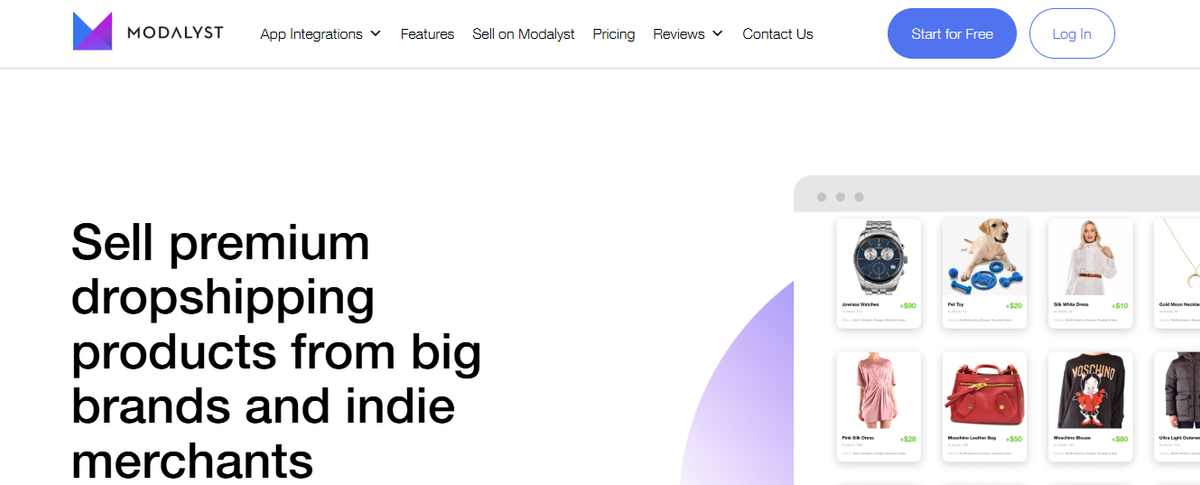
Modalyst is a standout Shopify dropshipping app, ideal for sourcing and selling a wide range of unique products from pre-vetted suppliers. With seamless Shopify integration and automated order fulfillment, inventory management and supplier communication are simplified, making it easy to add products from a network of over a million options. Modalyst also offers real-time inventory updates and tools, such as a profit calculator, giving users more control over their store’s performance.
Key Features
- Access to over a million unique products from pre-vetted suppliers
- Automated order management and stock adjustments
- Real-time inventory updates
- US and international fulfillment centers
- Private labeling options for brand development
15. Zopi: Best for Seamless AliExpress and Temu Dropshipping Integration
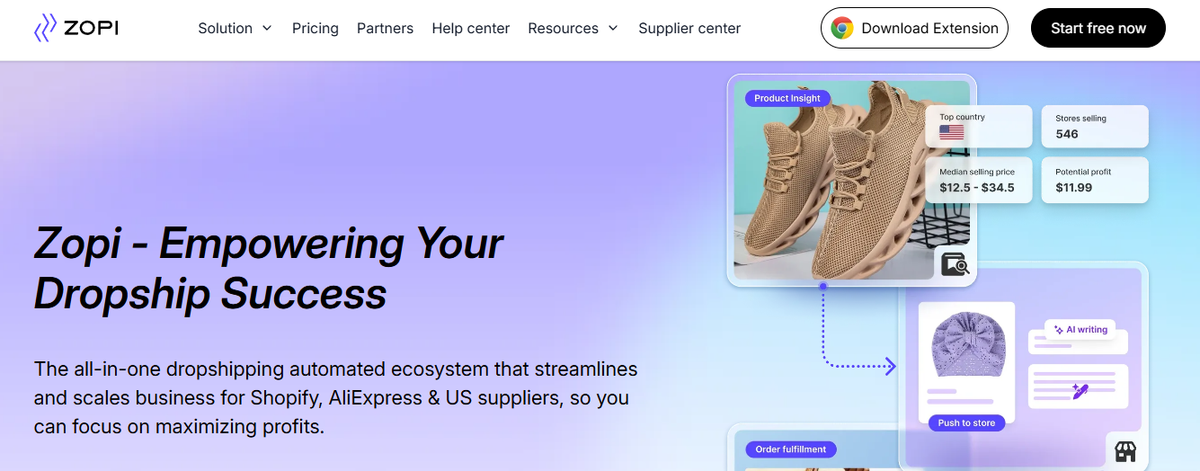
Zopi, formerly known as Ali Orders, is a powerful dropshipping app for Shopify, designed for merchants who want to import products from AliExpress and Temu with ease. It's one-click import feature simplifies adding products to your Shopify store, while automated tools:
- Manage inventory
- Track supplier stock
- Update pricing in real-time
Automated Dropshipping with Zopi
Zopi also offers automated order fulfillment, customizable pricing rules, and advanced features, such as product variant splitting. The app is user-friendly and provides excellent customer support, making it a go-to solution for streamlining dropshipping operations. Zopi supports data migration from other platforms such as:
- DSers
- Oberlo
- Zendrop
Key Features
- One-click product import from AliExpress and Temu
- Automated stock and price tracking
- Customizable pricing rules
- Automated order fulfillment
- Order tracking for enhanced customer visibility
- Supports data migration from other dropshipping platforms
How to Choose Dropshipping Apps Based on Your Growth Stage
The apps that make sense at 5 orders a day are not the same ones you need at 50 or 500. Choosing tools designed for a different stage either wastes money on features you do not use yet or creates bottlenecks that hold you back when volume increases. The framework below helps you match your app selection to where your business actually is right now, not where you hope it will be in six months.
Beginner Stage (0 to 10 Orders Per Day)
At this stage, you’re still learning what products sell, which suppliers are reliable, and how your store performs with real traffic. The priority is getting products listed, running small ad tests, and processing orders without overcomplicating the workflow.
A basic sourcing app like DSers or Dropshipman, the free Shopify plan or Basic tier, and a fast way to create product pages are usually enough. Avoid stacking paid apps before you have consistent revenue to justify them. Use free tiers where available, and focus your budget on ad testing and product validation rather than software subscriptions.
Testing and Growth Stage (10 to 50 Orders Per Day)
Once orders are coming in consistently, manual work starts eating into the time you need for product testing and marketing. This is when automation tools earn their cost. You need reliable inventory syncing to avoid overselling, automated order routing so you are not manually forwarding every order, and better product pages so your conversion rate keeps up with increasing ad spend.
Apps like Zendrop or HyperSKU for fulfillment automation, Spocket or CJ Dropshipping for faster supplier options, and PagePilot for rapid product page creation become valuable additions at this stage. The goal is speed: faster product testing, faster fulfillment, and faster iteration on what is working.
Stores that test products faster find winners sooner, and the apps you use at this stage directly determine how many products you can evaluate per week.
Scaling Stage (50+ Orders Per Day)
At scale, reliability and efficiency become the priority. A single inventory error or fulfillment delay affects dozens of customers. You need multi-supplier support so a stockout from one source does not shut down your best seller. You need advanced analytics to understand which products, suppliers, and channels are actually profitable at volume. You also need branding tools, including custom packaging, private labeling, and branded invoicing, to build repeat purchase behavior and differentiate from competitors selling identical products.
Apps like HyperSKU and Zendrop support private labeling and custom packaging. CJ Dropshipping offers warehouse options for faster regional fulfillment. At this stage, your app stack should function as an integrated system where data flows automatically between tools, and every app earns its monthly cost through measurable time savings or revenue impact.
The best dropshipping apps for Shopify in 2026 depend on your stage. Beginners need simplicity, growth stores need speed and automation, and scaling operations need reliability and integration.
What Actually Impacts Profit in Dropshipping
Most merchants focus on product cost and selling price when thinking about profitability, but the factors that actually determine whether a dropshipping store makes money go well beyond the margin on a single product. Understanding what drives profit helps you choose apps based on the outcomes they produce rather than the features they list.
Conversion rate has the most direct impact on profitability because it determines how much revenue you generate from the traffic you are already paying for. If two stores run the same ads to the same audience, the one with a 3% conversion rate earns 50% more revenue than the one converting at 2%, with no additional ad spend. Your product pages, page speed, trust signals, and overall store experience all affect conversion, and the apps you use to build and optimize those pages are a direct lever on this metric.
Shipping speed affects more than delivery expectations because it also shapes customer satisfaction, refund risk, and repeat purchase behavior. Stores using US or EU suppliers with 3 to 7 day delivery consistently outperform stores relying on 15 to 30 day shipping from overseas when it comes to customer reviews and repeat orders. Apps like Spocket, DropCommerce, and Zendrop that connect you to regional suppliers can improve this metric significantly.
Product cost still matters, but it should not be treated as the only profitability metric. A product with a $5 cost and a 60% margin can still lose money if the conversion rate is low and the cost per acquisition through ads is high. Margin is the result of the entire system, not just the supplier price.
Product page quality ties everything together because it is the point where traffic either converts or leaves. A well-structured product page with clear benefits, strong images, social proof, and fast load times justifies higher prices, builds trust, and increases the percentage of visitors who buy. This is the factor that most dropshippers underinvest in, and it is the one where small improvements produce the largest profit impact.
The stores that protect profit best are usually not the ones with the cheapest products. They are the ones with stronger conversion, better fulfillment experience, and a cleaner connection between traffic, offer, and product page.
Common Mistakes When Choosing Dropshipping Apps
The mistakes that hurt most are usually the quieter decisions that add friction, increase monthly costs, and slow the business down without creating one dramatic failure point. When merchants catch these patterns early, they usually save both money and time because the store becomes easier to manage and the stack stays focused on what actually helps performance.
Installing Too Many Apps
Installing too many apps is one of the most common problems in dropshipping because every extra tool adds another layer of cost, setup, and maintenance. A bloated app stack can also make the store harder to manage day to day, especially when several tools overlap or create small speed and workflow issues that build up over time.
Merchants who install eight or ten apps when three or four would cover the same core functions often end up managing software instead of running the business. Before adding a new app, it helps to check whether an existing tool already handles that job well enough, because duplicate functionality usually creates more complexity than value.
Choosing Apps Based on Features Instead of Use Case
A long feature list can make an app look more impressive than it really is. In practice, though, most merchants only use a small portion of what they pay for, which means the rest of those features become added complexity rather than added value.
The better approach is to choose apps based on the specific problem you need solved right now. If the immediate need is automated order routing and inventory sync, then a tool that handles those functions cleanly is usually a better fit than a larger platform loaded with features you may never touch.
Ignoring Integration Between Tools
Poor integration creates manual work that should not exist in the first place. If your sourcing app does not connect properly to your fulfillment workflow, or your fulfillment app does not sync tracking details back to Shopify automatically, you end up filling the gaps by hand, and that is usually where mistakes, delays, and wasted time start to pile up.
That is why integration should be checked before committing to any app, not after. A tool may look strong on its own, but if it does not connect cleanly with your Shopify store and the rest of your stack, it can create more operational drag than it removes.
Treating Conversion as an Afterthought
This is usually the mistake with the biggest profit impact because many merchants invest heavily in sourcing and fulfillment while giving far less attention to the part of the store that actually turns traffic into revenue. A well-automated backend does not help much if the customer lands on a weak product page that fails to build trust or communicate the offer clearly.
That is also where PagePilot’s positioning makes sense within the stack. The brand presents its product around helping dropshippers launch higher-converting product pages faster, reduce manual work, and test more products without spending the same amount of time building pages from scratch.
Building an Operations-Only Stack
The biggest mistake is building a dropshipping stack that is focused entirely on operations while ignoring the tools that directly affect conversion and revenue. Sourcing and fulfillment still matter, but they do not create growth on their own if the store experience is not strong enough to turn visitors into buyers.
A better stack keeps both sides working together. You want tools that make operations more efficient, but you also need tools that strengthen product pages, support faster testing, and improve the part of the business that actually determines whether traffic becomes sales.
How to Choose the Right Dropshipping Apps
Align the Dropshipping App with Your Business Model
A dropshipping store is a business, not a hobby. So you need to choose the right app for your business. First, identify your niche. Are you focused on fashion, electronics, home decor, or another category? Next, consider your customers. Do they expect fast shipping, or are they willing to wait longer for custom goods? Your answers here will shape which features you should prioritize, such as:
- Supplier reliability
- Fulfillment speed
- Branding support
Ensure the app integrates seamlessly with your e-commerce platform (such as Shopify or WooCommerce).
Test Drive Before You Commit
Many dropshipping apps offer free trials. Use this time to evaluate how the app fits into your daily operations. Is it intuitive? Does it simplify tasks or just add more steps? Also, check user reviews, especially those from recent times. They often reveal issues such as:
- Slow syncing
- Poor customer service
- System bugs that are not mentioned in the product description
Check Support and Ongoing Updates
In dropshipping, things break, product listings vanish, orders glitch, and suppliers change prices. When they do, you need fast and helpful support. Choose apps with a reputation for responsiveness and transparency. Equally important is whether the app receives regular software updates. An app that hasn't been touched in six months could pose security risks or fall behind platform changes.
Prioritize Long-Term Reliability
A good dropshipping app won't just help you launch, it'll scale with you. As your order volume increases, the right tool should be able to handle the load without slowing you down. Think long-term from the start and choose apps that are built to support growth, not just early-stage operations.
Related Reading
- How To Use AI For Dropshipping
- How To Set Up A Dropshipping Business
- How To Find Winning Products For Dropshipping
- How Much Can You Make Dropshipping
- Dropshipping Business Ideas
- Best High Ticket Dropshipping Products
Tips for Maximizing Results With Dropshipping Apps

Build a Full-Stack Automation System
When it comes to dropshipping, the more apps the merrier. For example, relying on a single app to both source products and automate order fulfillment is a recipe for disaster. What happens when you get a surge of sales? You’ll be stuck on the app’s dashboard, manually processing orders instead of relaxing and letting automation do the work.
Integrated Tool Stack for Dropshipping Efficiency
The most efficient dropshipping setups utilize a combination of tools, including product sourcing apps to find and list items, fulfillment apps to automate order routing, and marketing apps to drive traffic and convert visitors. When these tools work together, you reduce manual work and speed up operations. This approach frees up your time to focus on growth instead of logistics.
Track Performance Through Analytics
Most dropshipping apps include reporting features, but it’s up to you to use them. Make it a habit to check my dashboards regularly to track what’s selling, what’s not, and where margins are getting squeezed. Identifying underperforming products early helps you cut losses, while doubling down on top performers can increase revenue without additional ad spend.
Integrate With Your Broader Tech Stack
Look for apps that offer integrations with your CRM, online marketplaces (like Amazon, eBay, or Etsy), and shipping providers. When everything communicates with each other, you avoid errors like overselling, delayed shipping, or missing customer information. Seamless data flow across platforms means fewer headaches, better customer experiences, and more accurate fulfilment, especially as your order volume grows.
Start a FREE Trial and Generate 3 Product Pages with Our AI Page Builder Today
PagePilot is a game-changing AI product page generator. It helps you build high-converting product pages at lightning speed. Simply enter a competitor or supplier URL into our software, and PagePilot will create an SEO-optimized product page using the information from that website. It doesn't just stop there. PagePilot will also improve the images associated with the product, so you're not competing with the same copywriting and product images as your competitor. This enables you to get ahead of the competition, allowing you to start making sales faster.
Related Reading
- Dropshipping Products With High Profit Margin
- Best Dropshipping Software
- AI Tools For Dropshipping
- Best Dropshipping Products
- Gempages Vs Pagefly
- Shogun Vs Pagefly
- Pagefly Alternatives
Building a Smarter Dropshipping Stack with PagePilot
The apps you choose shape how your dropshipping business operates at every level, from how quickly you find and list products to how efficiently orders get fulfilled to how well your store converts the traffic you drive to it. But the goal is not to install the most apps or pick the ones with the longest feature lists. It is to build a lean stack where each tool handles a specific function and integrates cleanly with the rest.
The stores that scale profitably in 2026 are the ones that cover three areas well: sourcing products from reliable suppliers, automating fulfillment so operations do not break under volume, and converting traffic into revenue through strong product pages. Most merchants invest heavily in the first two and underinvest in the third, which means they are paying for traffic that lands on pages that do not sell. Conversion is the most overlooked leverage point in a dropshipping stack, and the tools you use to build and optimize product pages have a direct, measurable impact on whether your ad spend turns into profit.
Keep the stack simple, match your tools to your current stage, and remember that the fastest path to profitability is not more apps. It is a system where sourcing, fulfillment, and conversion work together without friction.
If you want to see how fast you can go from product idea to live, tested product page, try PagePilot free and generate your first three pages in minutes with no credit card required.